Eco removals in Paddington: refurbish and recycle guide
If you are planning a move in Paddington, there is a good chance you are staring at a mix of old furniture, half-used boxes, and that one chair you have been meaning to repair for years. Truth be told, moving is often the moment people notice just how much usable stuff they already own. That is exactly where an eco removals in Paddington: refurbish and recycle guide becomes useful. It helps you move smarter, cut waste, and make better decisions about what to keep, repair, donate, or recycle.
This guide is built for real life in W2: tight stairwells, busy streets, awkward parking, and the classic London moving headache of "where does this actually go now?". You will find practical steps for refurbishing items before a move, separating recyclable materials properly, and avoiding common mistakes that create stress or unnecessary landfill waste. Small changes can make a surprisingly big difference.
By the end, you will know how to plan an eco-friendlier move without turning it into a weekend-long ordeal. And yes, you can still get the job done without becoming some sort of decluttering monk.
Why Eco removals in Paddington: refurbish and recycle guide Matters
Paddington has its own moving rhythm. Flats are often compact, access can be awkward, and disposal options are not always obvious when you are rushed. That is why eco removals matter here more than people expect. A quick "dump and go" approach might feel simpler in the moment, but it often creates more cost, more waste, and more friction later.
Refurbishing and recycling before or during a move means you are making decisions item by item, instead of treating everything as rubbish. Some items only need a basic clean, a loose screw tightened, or a fresh coat of paint to be useful again. Others can be broken down into recyclable materials. And some things are just ready to leave your life, which is fine too.
The environmental part is obvious. The practical part is just as important. Less waste means fewer bags, fewer trips, and usually a simpler move. It also helps with local access issues, because bulky items that would otherwise clog a hallway or van can be handled more efficiently. In busy areas, that matters. A lot.
Expert summary: The best eco move is not about being perfect. It is about making sensible choices early, so reusable items stay in use and true waste is handled responsibly.
How Eco removals in Paddington: refurbish and recycle guide Works
The process is straightforward once you break it into stages. First, you sort items by condition. Then you decide whether they can be repaired, reused, donated, sold, dismantled, or recycled. Finally, you arrange the right removal method for each category. That sounds neat on paper, and to be fair, with a good plan it can be.
1. Sort items by outcome
Use a simple three-way split:
- Refurbish: items worth repairing, cleaning, or refreshing.
- Reuse or donate: items still in good condition and suitable for another home.
- Recycle or dispose: items that are damaged, worn out, or no longer safe to use.
This is where many people save time. You do not need to debate every single object for ten minutes. If a cupboard is structurally fine but tired-looking, refurbish it. If a lamp works but no longer suits your space, pass it on. If a mattress is damaged beyond sensible use, it should be handled through the correct waste route.
2. Refurbish practical items first
Refurbishment is often the most overlooked part of moving. It can be as simple as replacing handles, polishing wood, or fixing a wobbly leg. In a Paddington flat, that might mean the side table that has survived three moves already and still has good bones, if not much charm.
Refurbishment works best for furniture, shelves, storage boxes, mirrors, and small appliances that are worth saving. It is not about restoring everything to showroom condition. Sometimes "good enough to keep in use" is the right standard.
3. Recycle with material separation in mind
Once you know what cannot be reused, think in terms of materials: wood, metal, cardboard, textiles, hard plastics, and electrical waste. Mixed waste is harder to handle and often less efficient to recycle. Breaking things down safely can help, but only if the item is suitable for dismantling and you are not creating a safety risk in the process.
4. Use the right removal method
Different items need different handling. A single sofa is not the same as a van full of mixed office furniture, and a few boxes of household bits are not the same as a full clear-out. Services such as man and van removals can suit smaller jobs, while larger domestic moves may call for home move support. If you are moving from a business premises, commercial moves may be the more appropriate route.
Key Benefits and Practical Advantages
The obvious benefit is less waste. But there is more to it than that. Eco removals can make the whole move feel lighter, both physically and mentally. A room with fewer unwanted items is easier to pack, easier to clean, and easier to move through. You notice the difference the minute you stop tripping over stuff that should have gone months ago.
Less landfill waste
Refurbishing and recycling reduce the amount of material sent straight to disposal. That is good for the environment, but it also encourages more thoughtful decisions about what stays in circulation.
Lower moving stress
When items are sorted in advance, moving day is less chaotic. You are not trying to decide what to do with a battered bookshelf at 7am while the kettle is still heating. That little bit of planning pays off.
Better use of space
Paddington homes can be compact, especially in older buildings. Clearing out or refurbishing before moving helps you avoid paying to move items you do not really need. A move should carry value, not clutter.
Potential cost efficiency
Although costs vary, separating out reusable items, recyclable materials, and true waste can help you choose the most efficient removal option. Smaller loads are often easier to manage. Fewer trips, less handling, less faff.
Stronger resale or donation value
Furniture and household goods in decent shape can often be passed on, donated, or sold. Even if the money side is modest, it is still better than watching a useful item disappear into general waste.
| Approach | Best for | Pros | Watch-outs |
|---|---|---|---|
| Refurbish | Solid furniture, fittings, usable household items | Extends lifespan, keeps value, reduces waste | Needs time, tools, and a realistic standard |
| Recycle | Separated materials, broken items, packaging, some electricals | Good environmental outcome, cleaner disposal | Requires correct sorting and suitable facility access |
| Reuse or donate | Items in decent condition | Helps others, cuts disposal volume | Items must be clean, safe, and acceptable to the recipient |
| Dispose responsibly | Damaged, unsafe, or non-recoverable waste | Closes the loop properly | Needs careful compliance and correct route selection |
Who This Is For and When It Makes Sense
This guide is useful for anyone moving in or around Paddington, but it really shines in a few common situations.
Home movers with limited space
If you live in a flat, maisonette, or shared property, you probably do not have a spare room to hide unwanted items. Sorting early helps you make better use of the limited space you have, which matters when every corner seems to already be occupied by something.
People upgrading or downsizing
Moving into a smaller place is often the perfect time to refurbish key items and recycle the rest. Moving to a larger place can be just as useful, because you get to choose what deserves room in the next chapter.
Landlords, tenants, and landlords' agents
End-of-tenancy clearances often involve items with mixed value: some reusable, some damaged, some just awkward. A refurbish-and-recycle approach can simplify the handover and help avoid rushed disposal decisions.
Small businesses and offices
Office chairs, desks, shelves, filing units, and electronics can often be sorted into usable and non-usable categories. For business moves, a plan is especially helpful, because you may also need to think about timing, access, and minimising downtime. If that sounds familiar, you may find it useful to compare with office relocation services.
Anyone who hates waste but also hates admin
Let us be honest: not everyone wants to turn a move into a sustainability project. You do not have to. This guide is for people who want a practical, sensible process that reduces waste without taking over their week.
Step-by-Step Guidance
Here is a clear way to handle eco removals without overcomplicating things. Keep it simple, stay realistic, and move in stages.
- Walk through every room. Make a quick list of what you are keeping, refurbishing, donating, recycling, or binning.
- Tag refurbishable items. Put a note on items that need repair, cleaning, or minor improvements.
- Separate recyclables. Cardboard, paper, metals, textiles, and certain plastics should be kept apart where possible.
- Check electrical items carefully. Decide what can be reused, what needs repair, and what should go to proper e-waste handling.
- Break down bulky pieces safely. If an item can be dismantled without damage or risk, do it before moving day.
- Bundle similar waste together. This helps with loading and makes it easier to choose the right removal method.
- Arrange removal in the right order. Keep reusable pieces accessible and load true waste last if possible.
- Do a final sweep. Check cupboards, loft spaces, and under beds. People forget things there all the time. Always.
A sensible rhythm helps. First sort, then fix, then move. If you reverse that order, everything gets harder.
A quick example
Say you have a pine chest of drawers with loose handles and a scratched top. That is likely refurbishable. A cardboard packaging pile from a recent appliance delivery is recyclable. A broken office chair with a failed base may be suitable for parts recycling or responsible disposal. Different routes, different outcomes. Simple once you look at it that way.
Expert Tips for Better Results
Here are the bits that often make the biggest difference, even though they look small from the outside.
- Start with the largest items first. Big furniture shapes the whole plan. If you leave them until the end, they control the room.
- Use a "repair threshold". Decide in advance how much time or money you are willing to put into refurbishing something. That stops you from over-investing in low-value items.
- Keep fixable items together. A loose drawer handle, a packet of screws, and a touch-up tin all vanish when they are scattered.
- Photograph items you may donate or sell. It makes the next step quicker, and it is easier to track condition.
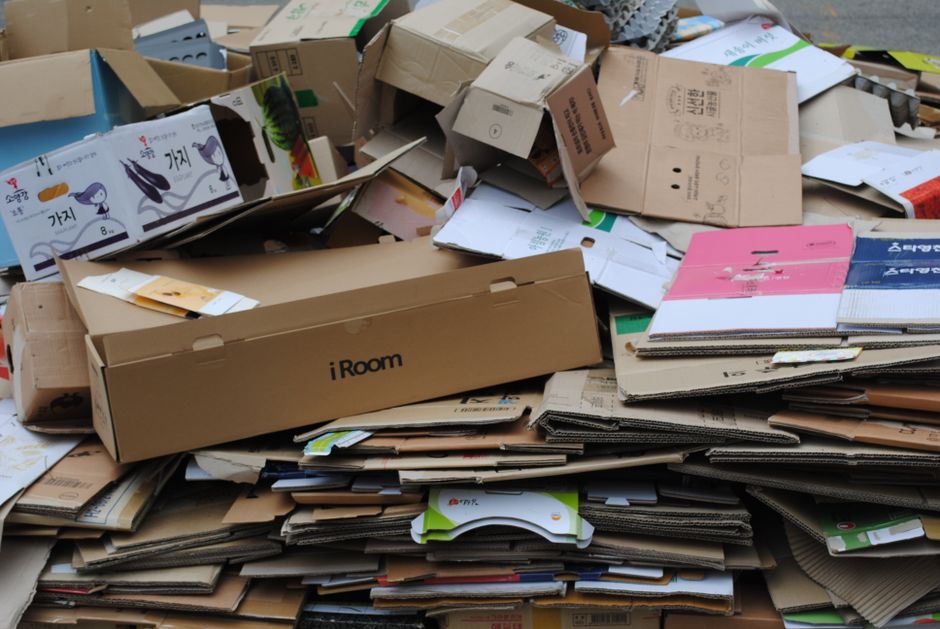
- Flatten packaging early. Cardboard boxes and wrap take up far more room than people expect. One minute they are "just a few boxes"; the next they are a mountain.
- Think in transport efficiency. Consolidating recyclable materials and reusable items can reduce the number of loads required.
One useful habit is to keep a "maybe" pile separate. Not everything needs an immediate yes or no. But do not let that pile become a permanent resident. That way lies chaos, and a cupboard full of indecision.
Common Mistakes to Avoid
Most moving mistakes are not dramatic. They are the little ones that create friction and extra cost later. Here is what to watch for.
Mixing everything together
If recyclables, reusable items, and general waste all go into one pile, you lose the chance to handle them properly. It also makes the move slower and messier.
Trying to refurbish too much, too late
Some items are worth fixing. Some are not. If you decide to restore everything the night before moving day, the whole process becomes unmanageable.
Ignoring access issues
In Paddington, access can matter as much as the items themselves. Narrow corridors, stairs, loading limitations, and busy roads can all affect how items are taken out. Planning around access is not optional. It is the job.
Overlooking hidden waste
People often forget what is tucked behind furniture, under beds, or inside cupboards. These are the classic surprise items that appear at the worst time. A last-minute box of mixed junk can derail a carefully sorted plan.
Using the wrong disposal route
Not every item belongs in the same process. Some need separating first. Others may contain electrical components or mixed materials that require more careful handling. If in doubt, treat it as something that deserves a bit more thought, not less.
Tools, Resources and Recommendations
You do not need a workshop to do this well, but a few basic tools make life much easier.
- Basic hand tools: screwdriver set, Allen keys, hammer, tape measure
- Cleaning supplies: cloths, mild cleaner, polish, gloves
- Packing materials: boxes, tape, labels, protective wrap
- Dismantling aids: small trays or bags for screws and fittings
- Sorting supplies: marker pens, colour tags, bin bags, sturdy crates
If you are moving larger items, it helps to understand the support available. Furniture pick-up can be useful for items that are still in good shape but no longer needed, while packing and unpacking services can reduce damage and save time if your move is already busy enough.
For heavier loads or awkward access, it may also be worth looking at moving truck options or removal truck hire if your job needs more capacity than a standard van. A smaller move might suit man with van support better. It depends on volume, access, and how much lifting you want to do yourself. Be fair to your own back.
Law, Compliance, Standards, or Best Practice
For eco removals, the main thing is to stay within sensible UK waste-handling expectations and local best practice. You do not need to become a compliance expert, but you do need to avoid careless disposal. Household waste, bulky items, electrical equipment, and commercial waste each need the right handling route.
A few practical principles are worth keeping in mind:
- Do not leave waste where it blocks access or creates a nuisance.
- Separate hazardous or sensitive items from general waste.
- Handle electrical items with extra care. They often need different treatment from normal rubbish.
- Keep records if you are moving business waste. Good paperwork habits save problems later.
- Use responsible services for bulky disposal. Shortcutting the process can create more hassle than it solves.
In Paddington, access and parking can also affect how you plan removals. If you are lining up a vehicle for a busy street or a tight loading area, it is sensible to check logistics early. That is where practical planning matters just as much as waste sorting. For more on tricky local logistics, the guide on parking suspension rules for removal vans in Paddington is a useful companion read, as is Westminster Council permits for Paddington removal vans.
Best practice in plain English: if an item can be reused, try to reuse it; if it can be refurbished, repair it properly; if it cannot, separate it and send it through the right route. That is the standard worth aiming for.
Options, Methods, or Comparison Table
Different situations call for different methods. A comparison can help you decide quickly without getting stuck in analysis mode.
| Method | Best use case | Effort level | Typical outcome |
|---|---|---|---|
| Refurbish before moving | Furniture or household items with good structure | Medium | Longer lifespan, less waste, better resale or reuse value |
| Donate or pass on | Clean items in usable condition | Low to medium | Quick exit for good items, lighter move |
| Recycle by material | Cardboard, metal, textiles, some plastics | Low to medium | Reduced landfill, cleaner disposal |
| Bulk removal | Large amounts of mixed waste or furniture | Low | Fast clear-out, but may need sorting first for best results |
| Full-service move with sort-and-pack support | Busy households, offices, or tight deadlines | Low | Less stress, fewer mistakes, better handling of valuable items |
If you are moving from a compact property, a hybrid approach is often best. Refurbish the pieces worth keeping, donate what you can, recycle the rest, and use a removal service for the heavy lifting. That is the sweet spot for most people, honestly.
Case Study or Real-World Example
Here is a realistic Paddington scenario. A couple moving from a W2 flat had a mix of furniture: a solid dining table, two dining chairs with loose joints, a bookcase with one damaged shelf, several cardboard boxes from deliveries, and an old desk chair that was no longer safe to use.
Rather than treating everything as one job, they split the load. The dining table was kept and cleaned. The chairs were tightened and refurbished. The bookcase was dismantled, with the usable wood and fittings separated from the damaged shelf. The cardboard was flattened for recycling. The desk chair was set aside for responsible disposal because the base had failed and repair would not have been sensible.
The result was a cleaner move, fewer bags of mixed waste, and less time spent on last-minute decisions. More importantly, they were not paying to move clutter they no longer wanted. A small thing, maybe, but it made the day calmer. Calmer matters.
This is the real point of eco removals: not perfection, but a smoother process with less waste and more control.
Practical Checklist
Use this before moving day. It keeps the process grounded.
- Walk through every room and note what stays, what goes, and what can be repaired.
- Separate furniture into refurbish, reuse, recycle, and dispose categories.
- Gather basic tools for minor fixes and dismantling.
- Flatten boxes and sort recyclable materials.
- Bag or box loose items by category.
- Label anything that needs extra care.
- Check access routes, lifts, stairs, and loading space.
- Set aside electrical items for careful handling.
- Remove items you plan to donate before the main moving load arrives.
- Do one final sweep of cupboards, shelves, and storage spots.
Small checklist, big difference. It is often the difference between a controlled move and a mildly chaotic one.
Conclusion
Eco removals in Paddington work best when you think in three stages: refurbish what still has life in it, recycle what can be responsibly separated, and move only the items that truly belong in your new place. That approach saves time, reduces waste, and makes the whole job feel less overwhelming.
Paddington moves can be busy and slightly awkward, but they do not need to be wasteful. A bit of planning, a practical mindset, and the willingness to sort things properly will carry you a long way. And if you are honest with yourself about what is genuinely worth keeping, the rest tends to fall into place.
Get a free quote today and see how much you can save.
Sometimes the smartest move is not the fastest one. It is the one that leaves your space cleaner, your load lighter, and your next chapter starting on the right foot.
Frequently Asked Questions
What does eco removals mean in Paddington?
Eco removals means moving in a way that reduces waste, reuses suitable items, and recycles materials properly instead of sending everything to general disposal. In Paddington, that often also means planning around access, loading space, and compact properties.
Should I refurbish furniture before a move or after?
Usually before, if the repair is simple and the item is worth keeping. Fixing a wobbly chair or refreshing a table before the move makes packing easier and helps you decide whether it is worth taking with you.
How do I know if an item should be recycled or donated?
If it is clean, safe, and still useful, donation or reuse is often the better first option. If it is damaged, incomplete, or unsafe, recycling or proper disposal is usually more appropriate.
Can I recycle old furniture in Paddington?
Some furniture can be broken down into recyclable materials, but not all pieces are suitable for the same route. Wood, metal, and some fittings may be separable, while upholstered or mixed-material items often need more careful handling.
What is the best way to handle bulky waste during a move?
Sort bulky items early and decide whether any can be reused, refurbished, or dismantled. This makes the removal process simpler and avoids last-minute confusion on moving day.
Do eco removals cost more?
Not always. Costs depend on volume, access, time, and the service you choose. In some cases, sorting items properly can reduce the amount you need to move, which may make the job more efficient overall.
Are packing services worth it for an eco-friendly move?
They can be, especially if you want fragile or valuable items packed carefully and want to reduce damage. Good packing also helps with reuse and recycling because items are less likely to be broken in transit.
What should I do with electrical items I no longer want?
Handle them separately from ordinary household waste. Check whether they can be repaired, reused, or need a special recycling route. Avoid mixing them into general rubbish without thinking it through.
How early should I start sorting items before moving day?
As early as possible. Even starting one room at a time a few weeks ahead can make a huge difference. The earlier you sort, the easier it is to refurbish or recycle items properly.
What are the most common mistakes people make with eco removals?
The biggest ones are leaving sorting until the last minute, mixing all waste together, and assuming everything damaged must be thrown away. A little judgement goes a long way.
Can eco removals help with office moves too?
Yes. Office furniture, electronics, paper waste, and storage items can often be sorted for reuse or recycling. For business moves, planning is especially useful because it helps reduce downtime and disruption.
What if I only have a small amount to move?
Even small moves benefit from the same process. A few boxes, one chair, and some packaging can still be sorted properly. Smaller jobs are often the easiest place to start with better habits.